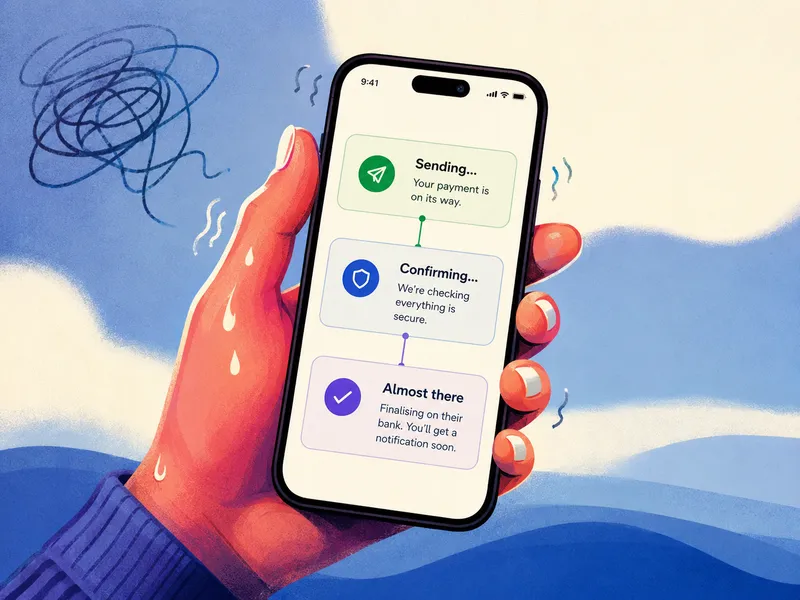
Trust Is Built With Copy, Not Code

In 2024 we built an AI trading app that lived inside Telegram.
Crypto. New. Untested.
To use it, you had to connect your wallet. Your real money. To an app you’d known for about ninety seconds.
Read that back. Everything about that setup asks a person to be afraid.
And the strange thing I learned as Creative Director on 10x.Trade is that the fear didn’t get solved by the technology. It got solved by words.
The idea in 20 seconds
- Crypto is a low-trust category, and people are right to be nervous.
- Connecting your main wallet to a fresh app feels like handing a stranger your keys.
- What actually calmed people wasn’t the smart contracts underneath.
- It was plain copy and small reassuring moments during the scary parts.
- Trust is a design material. You build with it, the same way you build with type and colour.
Why does a spinner make you nervous?
Think about the last time an app showed you a spinner while it moved your money.
That little circle just spins. It tells you nothing.
Is it working? Is it stuck? Did it take my money and freeze?
You have no idea. So your brain fills the silence with the worst answer.
We had that exact moment. A trade goes out, and there’s a gap while it clears.
The easy option was a spinner and a hope.
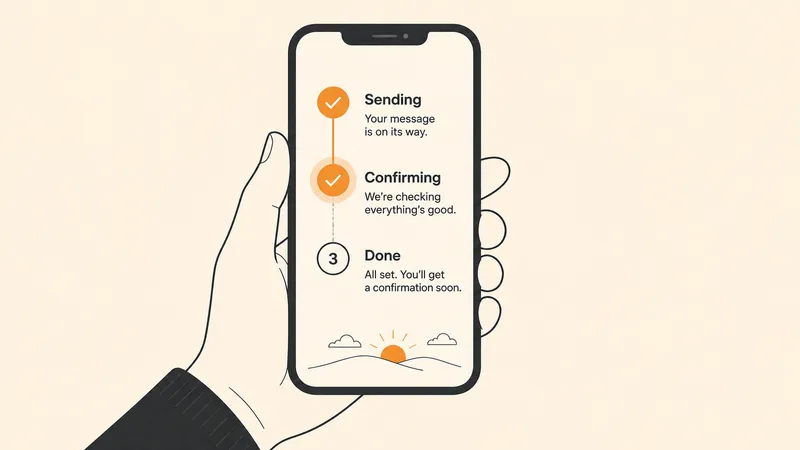
Instead we named every step out loud. Receiving trade. Sending to exchange. Awaiting confirmation.
Same wait. Same seconds. Completely different feeling.
Because now the app is talking to you. It’s saying, here’s where your money is right now, and here’s what happens next.
The anxiety wasn’t the waiting. The anxiety was not knowing.
We didn’t make it faster. We made it honest about what it was doing.
What happens if I close the app mid-trade?
This is the fear nobody says out loud.
You start a trade. Then Telegram closes. A call comes in. Your battery dies. Your thumb slips.
And a cold thought lands. Is my money gone?
In a lot of apps, closing the window during something delicate does break it. So people have learned to be afraid of the close button.
We designed the trade to survive that.
You could close Telegram mid-trade and your money didn’t vanish into a broken session. The transaction kept going without you. When you came back, it was still there, still doing its job.
But surviving isn’t enough on its own. The app has to tell you it survived, in words a nervous person can read.
So we wrapped it in plain, transparent copy. No jargon. No fine print. Just a clear promise that closing the window wouldn’t lose your trade, and then proof that it didn’t.
The engineering made it true. The copy made it felt.
The scariest move is the first one
Connecting your primary wallet is the biggest ask in the whole product, and it comes at the worst time. Right at the start. Before you trust anything.
You’re being asked to make your most exposed move before you’ve seen the app do a single honest thing.
So we changed the order of trust.
We designed the funding model so people didn’t have to connect their main wallet just to begin. The scariest step wasn’t the price of entry anymore.
You could start small. Watch it behave. Let it earn the bigger ask.
Trust isn’t a checkbox you demand up front. It’s something you let people give you slowly, once you’ve shown them you deserve it.
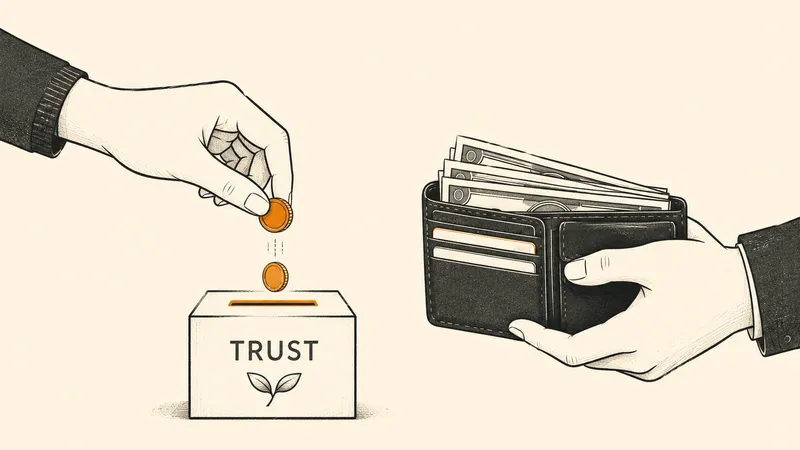
So what actually built the trust?
Not the smart contracts.
I mean that plainly. The clever tech underneath mattered, but it isn’t what people felt.
What people felt was a loading screen that told the truth. A trade that didn’t punish them for closing a window. A first step that didn’t demand everything.
Copy and micro-interactions did the work that security architecture gets the credit for.
The honest part
I’d love to tell you we designed all of this on purpose, from a tidy theory, on day one.
We didn’t.
We found most of it by watching people flinch. The flinch showed us where the fear lived, and the fix was almost always words, not code.
That’s the uncomfortable lesson. The trust wasn’t in the part of the product we were proudest of building.
It was in the small sentences we almost didn’t bother to write.
More writing
 interaction designhuman factors
Google Pay Taught a Country a Gesture. I Borrowed It.
The best way to teach a new action is not to teach it. Borrow one people already know in their fingers, and point it somewhere new.
 human factorsinteraction design
My Friend's Guruji Said No. I Shipped Anyway.
I turned a MacBook into a harmonium with an AI's help. The master's ear said no. Mine couldn't tell the difference. So I shipped it anyway.
 usabilityinteraction designhuman factors
The Door That Blames You
Norman doors reveal why repeated human error is often an object communicating badly.