
The Graveyard Won

I threw an idea in the bin.
The client reached in, pulled it back out, and fell in love with it. Then we built the whole project around that one reject.
The idea in 20 seconds
- SBI Youth for India is a 13-month rural fellowship. You leave your city. You live in a village. It asks for real sacrifice.
- The problem was never too few applicants. It was the wrong fit. Plenty applied. Not enough understood what they were signing up for.
- Language was a big barrier. Rural India speaks hundreds of languages. Words alone don’t travel that far.
- So we designed a symbol-based visual language, inspired by sign language. Pictures that carry meaning without words.
- When we presented, we showed the rejects too. The client picked one. That reject became the whole system.
Why symbols instead of words?
The thing about this fellowship is that it isn’t a job.
You leave the city. You live in a village for over a year. You give something up. That’s the point of it.
So the real problem was never “get more applications.” People applied. The problem was fit. Did the person applying actually understand what they were walking into?
And how do you explain that across a country that speaks hundreds of languages?
Words fail fast here. A neat paragraph in English reaches one kind of person. It misses everyone else.
So we went the other way. We built a visual language of symbols, the way sign language carries meaning without sound. A picture doesn’t need translating the way a sentence does. We wanted someone to look and feel what the fellowship asks, before they read a single line.
We drew a lot of these. Iteration after iteration. Most of them didn’t make it.
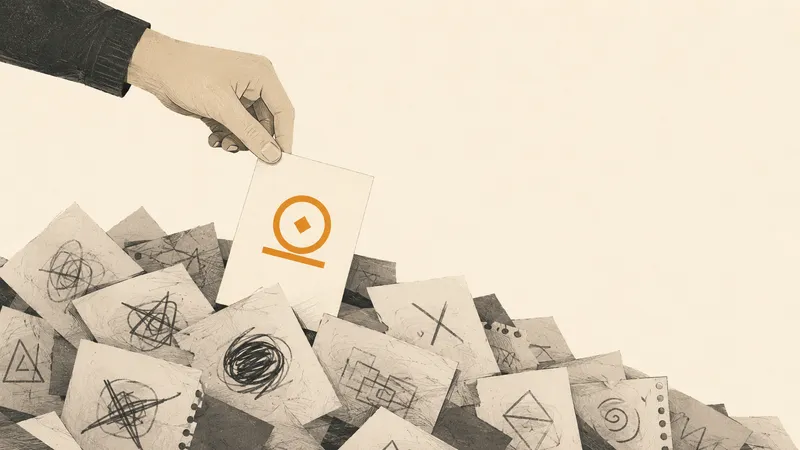
The graveyard
Every design project has a graveyard.
It’s the pile of ideas you tried and killed. The directions that didn’t work. The sketches you’re a little embarrassed by. Most of us bury it. We walk in with three clean options and act like the other forty never happened.
I used to do that too.
On this project, the client was unusual. SBI had hired actual past fellows to run the fellowship. People who had lived in the village. Who had done the 13 months. They knew the real problems first-hand, and they told us straight.
So when we presented, we didn’t just show the polished picks. We showed the graveyard. The rejects. The ones we’d already given up on.
And they stopped on one of them.
One symbol we had killed. They loved it. It said the thing we’d been trying to say the whole time. They just saw it, instantly, in the idea we’d thrown away.
Why did the reject win?
That part stung a little, and it taught me the most.
Why did they see something we couldn’t?
Because we were judging the symbols as designers. Does it balance? Is it clean? Does it sit right next to the others?
They were judging as fellows. Does this feel like the village? Does this feel like the thing I lived through?
Different question. Different eyes.
We killed that symbol for a design reason. They rescued it for a human one. On this project, the human one wins. It should.
So we did the honest thing. We took that reject and built the rest of the icon system to match it. We let the survivor lead. And the whole thing went through.
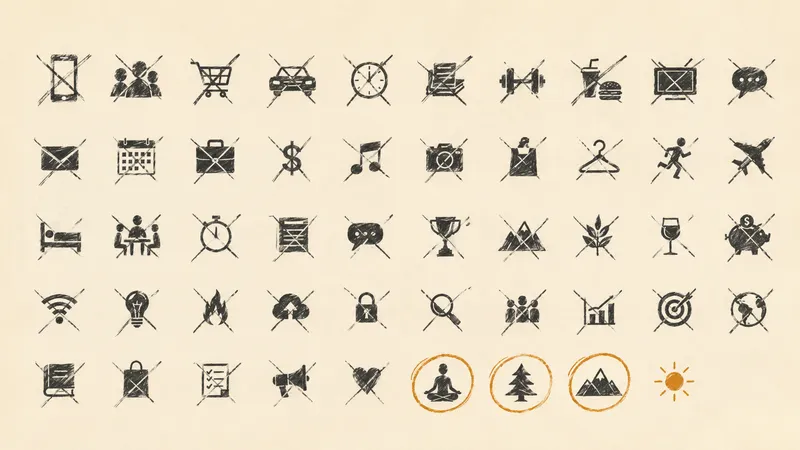
The mango at the bottom of the crate
Go buy mangoes from a good vendor. The best ones sit on top, arranged nicely. The bruised ones hide at the bottom, out of sight.
We present our work the same way. Best on top. Rejects tucked underneath.
But what if the client wanted the one at the bottom?
You’ll never know if you don’t show the crate.
Showing your rejected work feels like admitting you failed. Like handing over your rough drafts. It isn’t. It’s giving the client a real choice instead of a staged one. Three options you already pre-approved aren’t a choice. They’re a menu you wrote.
The graveyard is the choice.
What I do now
I don’t bury it anymore.
When I present, I bring the rejects. Not all forty. I’m not going to waste anyone’s afternoon. But the near-misses. The ones I liked but couldn’t justify. The ones that felt a step too far.
And I say it plainly. Here’s what we’re recommending. Here’s what we let go. Here’s why.
Sometimes they nod, and we move on with the pick.
And sometimes they reach past all of it and grab the one thing I’d already given up on.
The idea you kill isn’t dead. Not to the client. It’s just resting somewhere you stopped looking.
On YFI, the reject won. I didn’t win that fight. I got lucky I showed the graveyard at all.
That’s the honest bit. The best idea on that project was never mine to keep or throw away. I almost binned it. I’m just glad the crate was open.
More writing
 usabilityinteraction designinformation design
The Day Your Interface Disappears
Ten principles for making software feel less like an interface and more like instinct.
 systems designinformation designinteraction design
How Do You Design a Democracy for 173 Million People?
India's first general election was not only a political achievement. It was a vast exercise in inclusive system design.
 information designwayfindinginteraction design
A City Compressed Into Four Characters
The I ❤️ NY identity shows how a tourism campaign became a sentence people could complete with their own feelings.