
Give Them the Win First

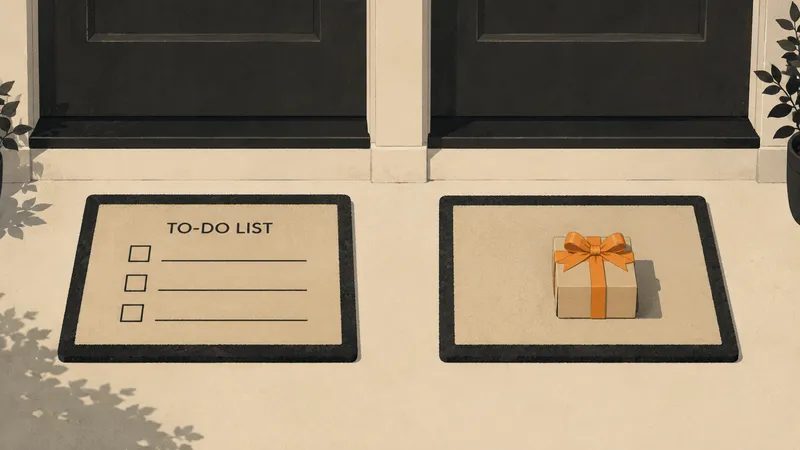
Most apps greet you with a to-do list.
We greeted people with a gift.
In 2024 I was Creative Director and product design lead on PepeJump, a play-to-airdrop game built inside Telegram for Revise Network. We built it fast. About two weeks, start to finish.
And the single decision I’m still proudest of cost us nothing to ship.
Every new player opened the game already holding a reward.
The idea in 20 seconds
- By mid-2024, Telegram was flooded with play-to-earn games. Most were noisy, confusing and a little sketchy, and people dropped off fast.
- Most apps drop you onto an empty screen and make you work before you get anything.
- We flipped it. Reward first, effort second.
- A brand-new player already had a loot box and coins before they’d tapped a single thing.
- A number climbing on screen is one of the most reliable delights in all of UX. So we opened with one.
What does an empty screen actually say?
Think about the last app you opened for the first time.
An empty inbox. A blank dashboard. “You have no items yet.”
We call these empty states, and we treat them as a technical fact. Of course it’s empty. You just got here.
But the person doesn’t read it as a fact.
They read it as a question. Was this worth it?
You’ve asked someone to show up, hand over their attention, maybe their trust, and the first thing you give back is a chore. Set up your profile. Invite three friends. Come back when you’ve earned something.
You’re making the guest cook before you’ll feed them.
In a calm category, you might get away with it. In a noisy one, you won’t. People had a hundred other tabs promising the same thing. An empty screen was a reason to close ours.

So we flipped it
Before a new player did anything at all, they had two things waiting: a loot box, and coins.
Not “you could earn these.” You have these. Right now.
And we let the interface celebrate it. Coins spilling in. A number ticking upward. That small mechanical joy of a counter going up.
You don’t have to explain that feeling to anyone. Nobody needs a tutorial for it. A number going up just feels like a good sign, the way green feels like go.
The empty screen asks, was this worth it?
A reward answers before the question is even finished.
Why does a number going up work so well?
Because progress is legible.
You don’t need to understand what the number means to feel that more of it is better. It works before comprehension does.
This mattered enormously in our category. PepeJump sat on top of token economics most players would never study and never should have to. If feeling like a winner depended on understanding any of that, we’d have lost people at the door.
So we made the feeling free. The number climbs. You’re ahead. Details later, if ever.
Everything else supported that one promise. A tight core loop: jump, earn points, unlock timed loot, build a trickle of passive income, come back for more. Readability came first and the frog’s personality came second. In a category full of shouting, we tried to feel calm. Momentum instead of empty states.
Was it just a cheap trick?
Fair question. Give someone something for nothing and it can read as bait.
But I want to be honest about where the idea came from, because it wasn’t a hunch I invented in a meeting.
Reward-first is one of the most well-worn patterns in games. The good ones have been opening with a win for decades: the free spin, the starter pack, the first level you basically can’t lose. We didn’t discover anything. We checked our instinct against games that had already proven it, and then we borrowed it on purpose.
The line I’d draw is this. A trick gives you a hollow win and hopes you don’t notice. A good opening gives you a real one, then quickly gives you something real to do with it.
We tried to stay on the honest side of that line. The coins were real. The loot was real. The loop underneath was built to keep being worth your time.
What I took with me
I don’t build play-to-earn games anymore. Doesn’t matter. The lesson travels.
Look at the first screen of anything you’re shipping. The signup. The dashboard. The first run.
Ask a plain question: in the first ten seconds, is this person giving, or getting?
If they’re only giving, you’ve started the relationship with a bill.
You can almost always find one small, real win to hand over first. A number that’s already moving. A thing that’s already done for them. Proof, before proof is earned, that showing up was worth it.
Start with the gift.
The chores will still be there.
More writing
 usabilityinteraction designinformation design
The Day Your Interface Disappears
Ten principles for making software feel less like an interface and more like instinct.
 usabilityinteraction designerror prevention
The Ballot That Made a Vote Point Sideways
What the butterfly ballot teaches us about alignment, error costs and the danger of interfaces that cannot confirm intent.
 usabilityinteraction designhuman factors
The Door That Blames You
Norman doors reveal why repeated human error is often an object communicating badly.