Finalised Isn't Final

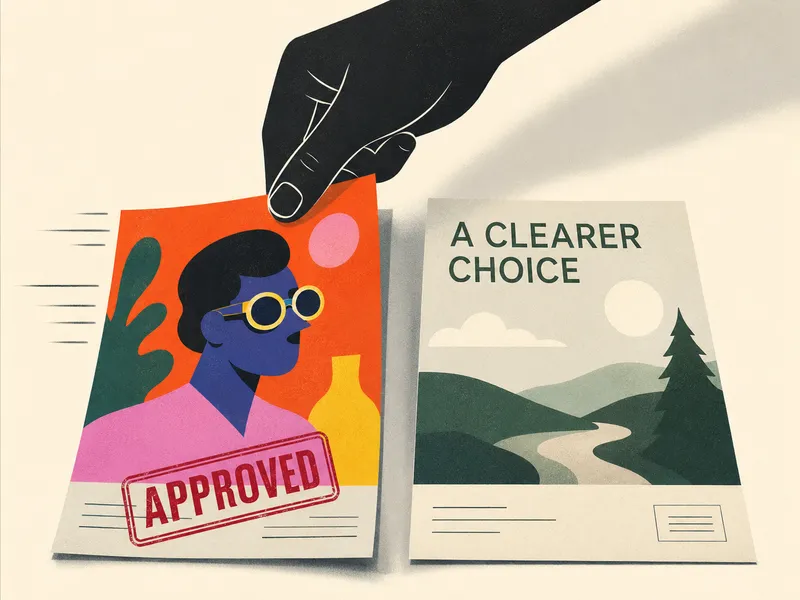
We finalised the design.
Everyone loved it.
Then, at the last moment, it didn’t ship.
The idea in 20 seconds
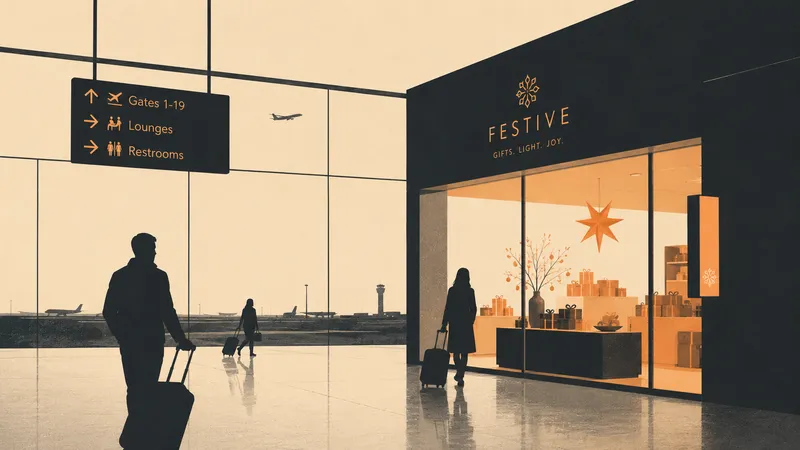
- In 2023 we built a Diwali design system for TUMI, the global luggage brand, rolling out across 125+ stores worldwide: malls, flagships, airports.
- We finalised one direction. The room agreed. It was, to my eye, the best-loved work.
- At the last moment a VP pulled it back, and we shipped a different, safer design instead.
- The one we shipped was genuinely great too. But it was the safe choice.
- The lesson stuck: “finalised” isn’t final until the most senior person in the building has looked. And up there, a design decision quietly turns into a risk decision.
What were we actually being asked to make?
The brief was a good one.
A Diwali experience that felt rooted in India, but stayed unmistakably TUMI. Precise. Restrained. And it had to work across many countries and many formats, from a shop window in one city to an airport unit in another.
That’s a harder ask than it sounds.
Because cultural design for a global brand isn’t about piling on symbols. It’s about restraint, and knowing what to leave out. You translate the sensibility. You don’t recreate the art.
One direction got ruled out early: no Mughal-style designs. Fine. That’s what an early boundary is for. It saves you from chasing the wrong thing for three weeks.
So we designed inside the lines. And it worked.
So what does “finalised” mean?
I thought it meant the work is done. The room agreed. We signed off. Now we produce it.
That’s what everyone in the room thought too.
But there was a room above our room. And in that room, nobody had seen it yet.
At the last moment, a VP pulled the finalised design back. We shipped the other one.
No drama. No teardown of the work. Just: the safer one, please.
Why did the good one lose?
This is the part worth sitting with.
The design that shipped was not worse. It was genuinely strong. If you saw both, you’d nod at both.
But the one that got pulled was, to my eye, the best-loved work of the project.
It didn’t lose to a better design.
My read is that the VP wanted to play safe, most likely because of some political sensitivities around that time. I wasn’t in that conversation. I don’t need to be, to understand it.
Because this is the thing I finally got: at the top, a design decision quietly becomes a risk decision.
The person signing off isn’t asking “is this beautiful?” They’re asking “what could this cost us?” A luxury brand in 125+ stores, across many countries, during a festival. That’s a lot of surface area. A lot of ways for a well-meant image to be read wrong somewhere you never intended.
So your best work can lose. Not because it’s worse. Because someone senior is de-risking something you can’t even see from where you sit.
Am I bitter about it?
No. Honestly, no.
Both designs were strong. The one that shipped served the brand well. And design serves the business, not my ego. That’s not a consolation line. It’s the actual job.
What I lost wasn’t a fight over craft. I never had that fight, because craft wasn’t the question anymore by the time it reached that desk.
What I gained was a clearer map of how decisions really move.
What I’d tell a younger me
An agreed sign-off is not the finish line.
The real decision often happens one level up, on grounds that have nothing to do with how good the work is. Sensitivities. Timing. Exposure. Things that live above your desk and outside the work entirely.
So when you hear “it’s finalised,” ask a quiet question: finalised by whom? Has the most senior person in the building actually seen it? If not, you’re not done. You’re just done with your part.
That’s not cynicism. It’s just knowing the terrain.
Do the best work you can. Fall a little in love with it. But hold it loosely near the end, because at the top, “finalised” and “final” are two different words.
And the gap between them is where your best design sometimes quietly goes to rest.
More writing
 systems designinformation design
Arm the Believer Inside
In a big organisation you rarely win the room yourself. You find the believer inside it, and arm them to win it for you.
 systems designinformation designinteraction design
How Do You Design a Democracy for 173 Million People?
India's first general election was not only a political achievement. It was a vast exercise in inclusive system design.
 information designwayfindingsystems design
Designing for Someone Moving at 70 mph
Britain's road signs show what happens when typography, language and environment are treated as one system.